
Stucco · San Gabriel Valley
Paint, Elastomeric or Color Coat: What Should Go on Your Stucco?
If your stucco has never been painted and it's sound, a color coat or fog coat keeps it paint-free. That's plastering work. If it's already painted, you can't go back without sandblasting, so you repaint it. A premium flexible acrylic suits most sound walls. Elastomeric suits walls where hairline cracks keep showing up or the wall takes water. The price gap between the two is small.
| Your stucco | Best option | Who does it |
|---|---|---|
| Never painted, sound, just faded | Color coat or fog coat | Plastering contractor (C-35) |
| Already painted, sound | Premium acrylic repaint | Painting contractor (C-33) |
| Painted, hairline cracks, takes water | Elastomeric repaint | Painting contractor (C-33) |
| Big, widening or recurring cracks | Find the cause first | Assessed before any coating |
The three options, in plain English
Color coat. A thin finish coat of colored stucco troweled or sprayed over the wall. The color is in the material, not on top of it. No paint film, so nothing to peel.
Fog coat. A thin cement-based wash sprayed over existing stucco to even out faded color. It refreshes the color without changing the texture. Also no paint film.
Paint. A film that sits on the surface. On stucco that means a premium acrylic or an elastomeric. Paint gives you any color you want. The trade-off is that once it's on, the wall is a painted wall for good.
Color coat and fog coat tint the stucco itself. Paint covers it. That one difference decides most of what follows.
First question: is your stucco already painted?
Run your hand across a wall that gets afternoon sun. Painted stucco that's aging goes faded and chalky, and it leaves a powder on your palm. Peeling or flaking is another giveaway. Integral color stucco has no paint film, so it can't peel.
If it's painted, the decision is made. Going back to a color coat means sandblasting the paint off first, then having the wall recoated. Most homeowners who hear the cost of that choose a good repaint instead.
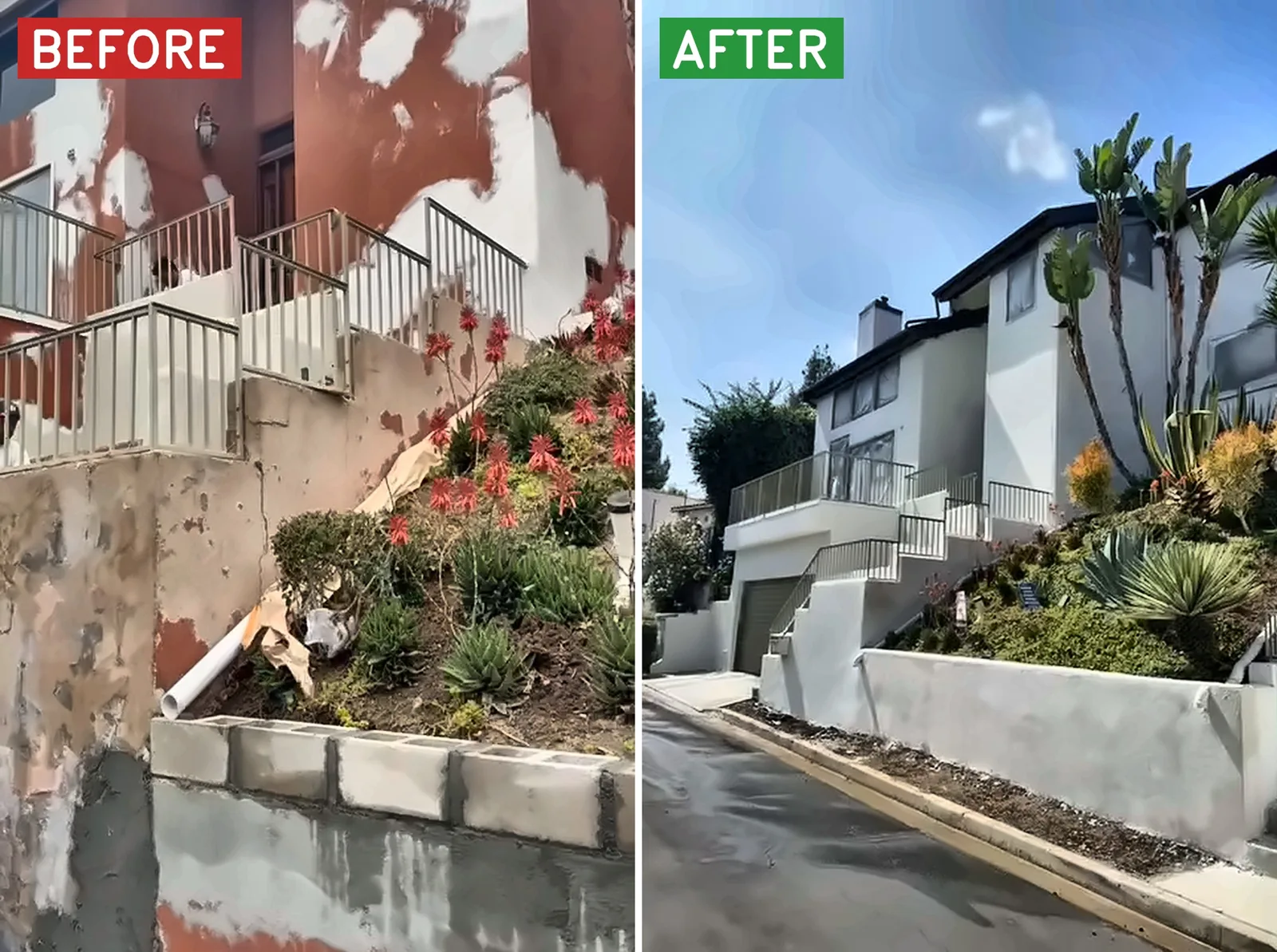
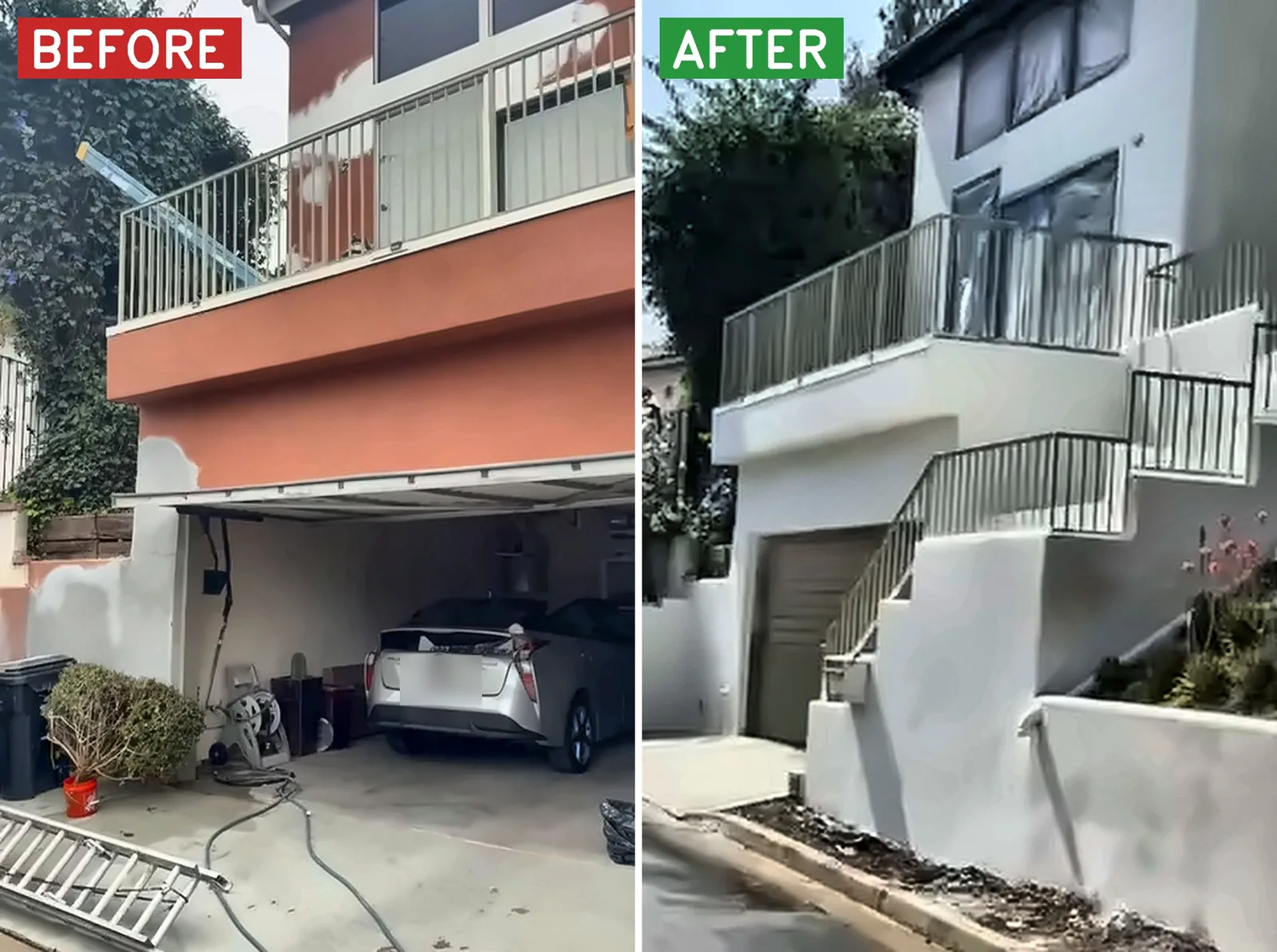
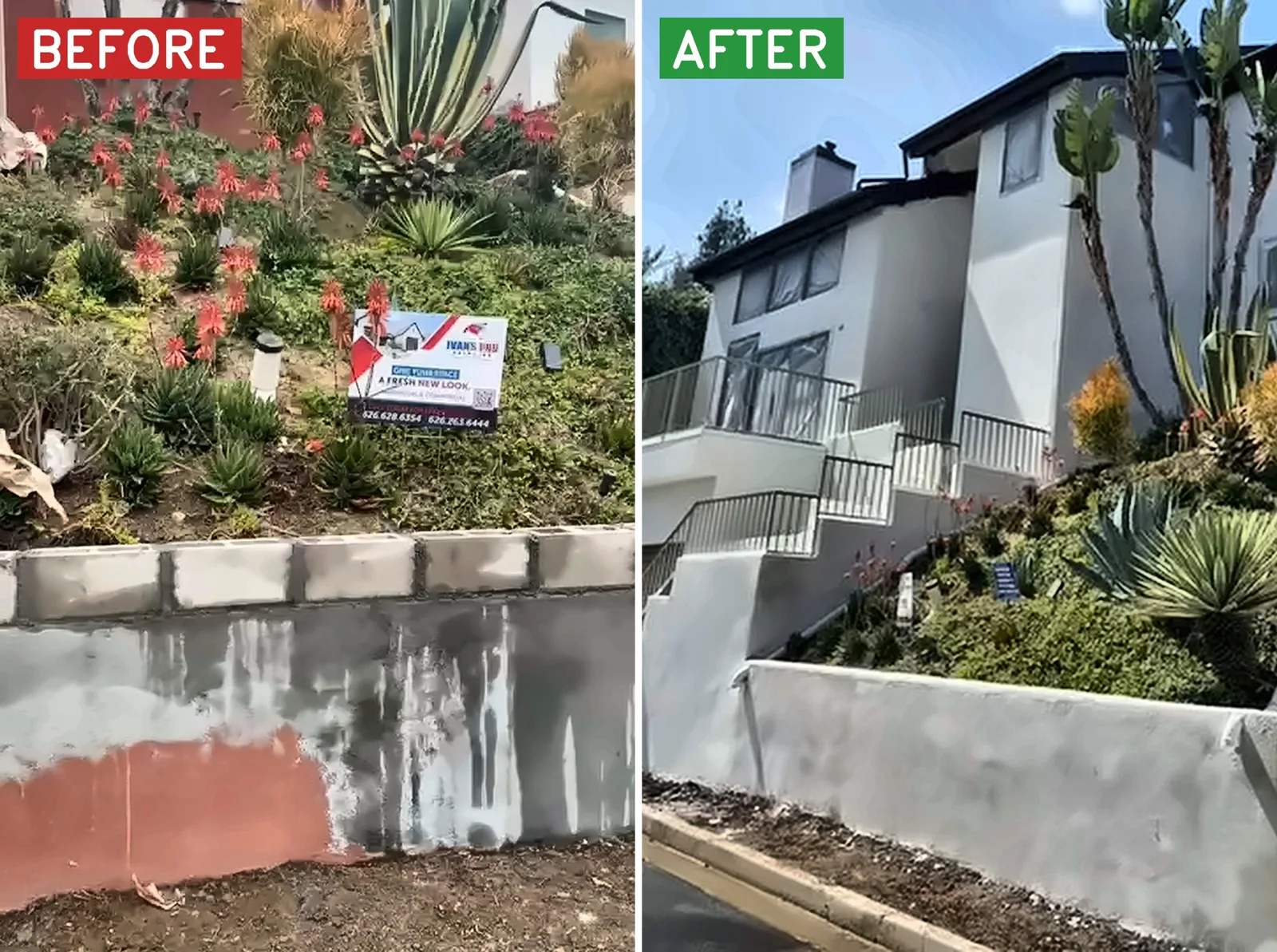
Our recent San Gabriel Valley stucco jobs were all on walls that had been painted before.
This two-story home had been painted orange. The stucco was patched, the walls were prepped, and the whole house was repainted white.
Premium acrylic or elastomeric?
Our go-to on stucco is Sherwin-Williams Emerald Rain Refresh. It sits at the top of their exterior line. It's built for exterior walls and it has flex in it, so it moves with the stucco instead of cracking with it. The paint carries Sherwin-Williams' lifetime limited warranty. Our written workmanship guarantee covers the job for up to 10 years.
Elastomeric goes on when a wall needs more than that.
| Premium acrylic (Emerald Rain Refresh) | Elastomeric | |
|---|---|---|
| Film | Standard thickness, flexible | Thick and rubbery |
| Hairline cracks | Moves with the wall | Stretches over cracks and holds them better |
| Water | Sheds rain | Waterproof barrier |
| Cost | Baseline | Not a big difference |
| Best for | Most sound stucco walls | Walls with hairline cracking or water exposure |
Elastomeric is not automatic. It's a heavier film and it breathes less. If moisture is getting into the wall from behind, that problem gets found before anything goes on. A thick coating over a wet wall only hides the issue for a while.
What happens to the cracks before any coating goes on
- We open each hairline crack slightly so the repair has something to grab.
- We fill it with an exterior-grade elastomeric caulk, made to flex with the wall and last outdoors.
- We patch over it to match the existing stucco texture.
- Prime, then two finish coats.
Fine spider cracks are normal in stucco. Buildings move, and stucco moves with them. Flexible coatings hold those better than stiff ones. Larger, widening or recurring cracks get assessed at the estimate before we recommend a fix. Our written workmanship guarantee covers the paint job. Cracks that come back from settling or movement are not covered, and we say so up front.
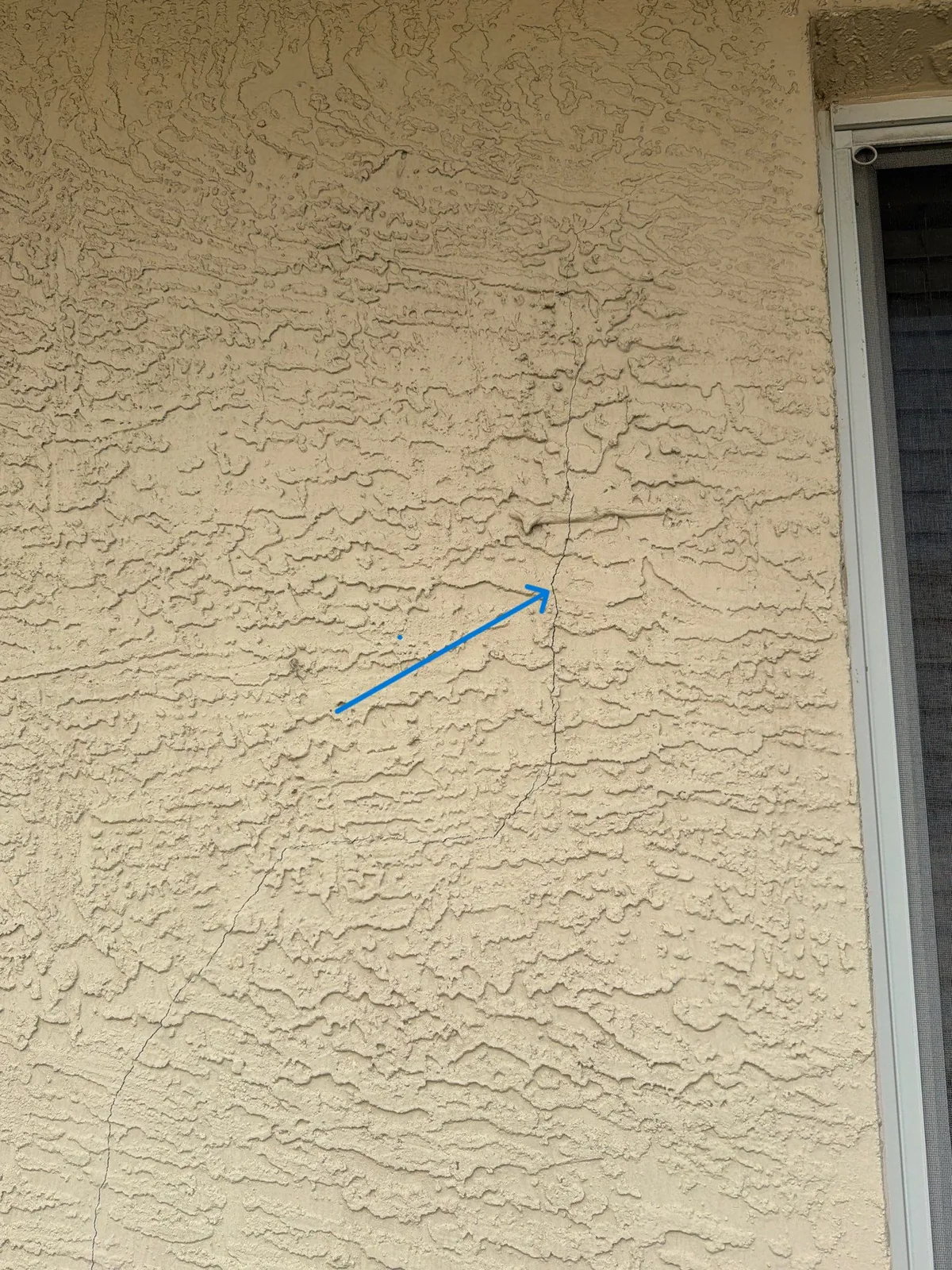
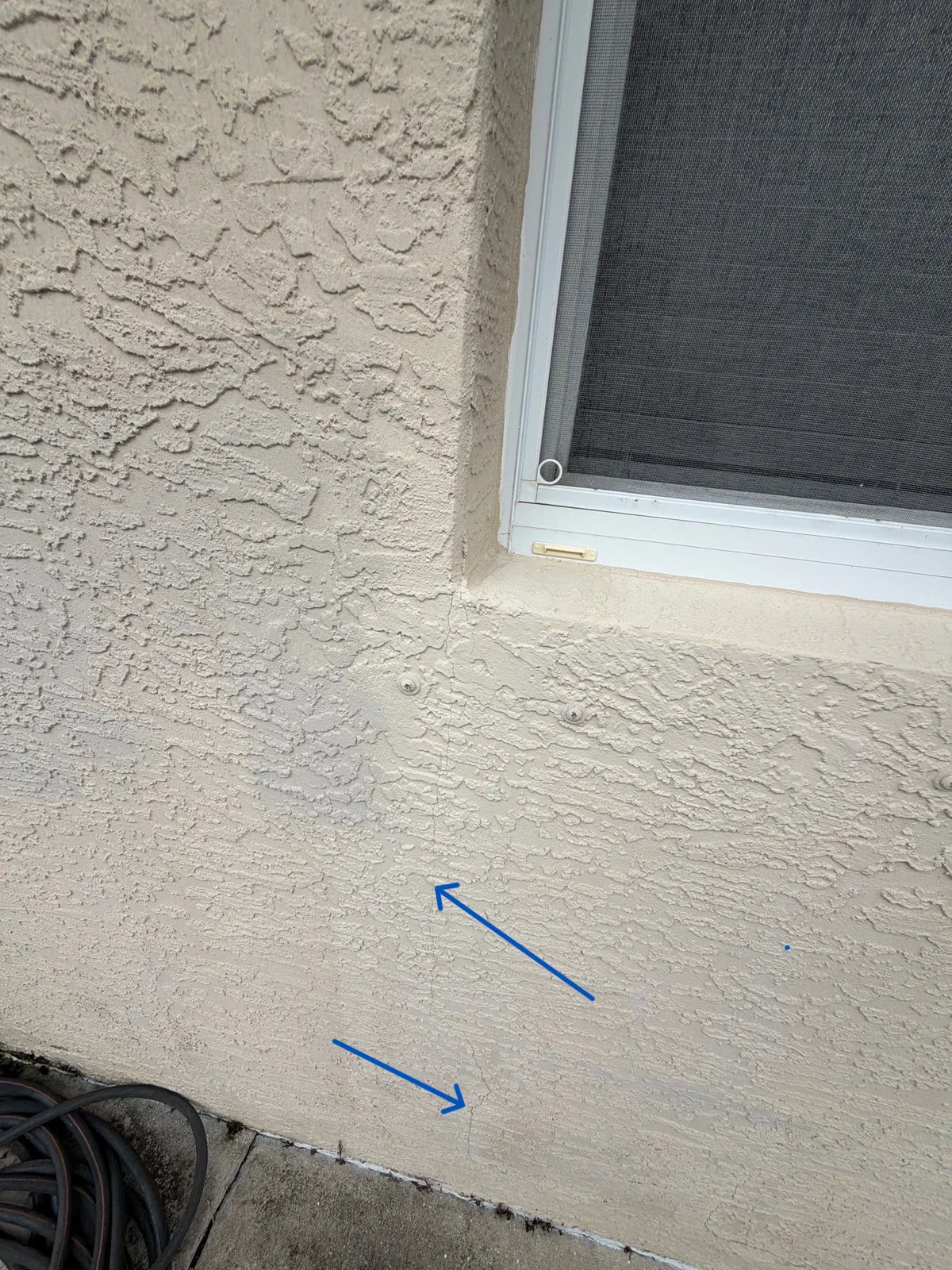
This is what hairline cracks look like before we touch them. Thin, often running off a window corner or down to the base of the wall.
What it costs
Exterior painting in LA County runs $4 to $9 per square foot. A 1,500 sq ft single-story home typically lands $6,000 to $13,500. A 2,500 sq ft two-story home runs $10,000 to $22,500, depending on size and wall height. Three-story homes and hillside lots run higher, often $1 to $2 more per square foot, so every home gets quoted on site. Elastomeric over premium acrylic is not a big difference in price. Crack repair is quoted per wall after we see it.
Lime wash, lime paint, Venetian plaster and Roman clay are quoted separately. We use Portola Paints for Roman clay and lime wash.
A color coat or fog coat is quoted by the plastering contractor who applies it.
When color coat is the better call, we'll tell you
Ivan's Pro Painting holds a C-33 painting license, CSLB #1095819. Color coat and fog coat are plastering work, done by a plastering contractor. If your stucco has never been painted and it's in good shape, a fog coat may be the right move, and you'll hear that from us on the walkthrough. If it's painted, cracked or taking water, that's our work.
Answers
Stucco Paint vs Elastomeric vs Color Coat FAQ
Can you paint over integral color stucco?
Is elastomeric paint worth it on stucco?
What paint do you use on stucco?
What's the difference between a color coat and a fog coat?
Does Ivan's Pro Painting apply color coats?
Will cracks come back after painting?
Can you paint stucco any time of year?
Get a straight stucco quote from a licensed San Gabriel Valley painter
Tell us what's on your wall. We'll tell you if it needs acrylic, elastomeric or a plasterer.
Book My Free Estimate →or call (626) 263-6444More Answers
Related Painting Guides
How Often to Repaint Stucco
How long stucco paint lasts in SoCal and the signs it's due.
Read the guide →Exterior Painting Cost
What exterior painting costs in Los Angeles and what a real quote includes.
Read the guide →Exterior Paint Prep
The prep steps that make exterior paint last 9 years, not 3.
Read the guide →